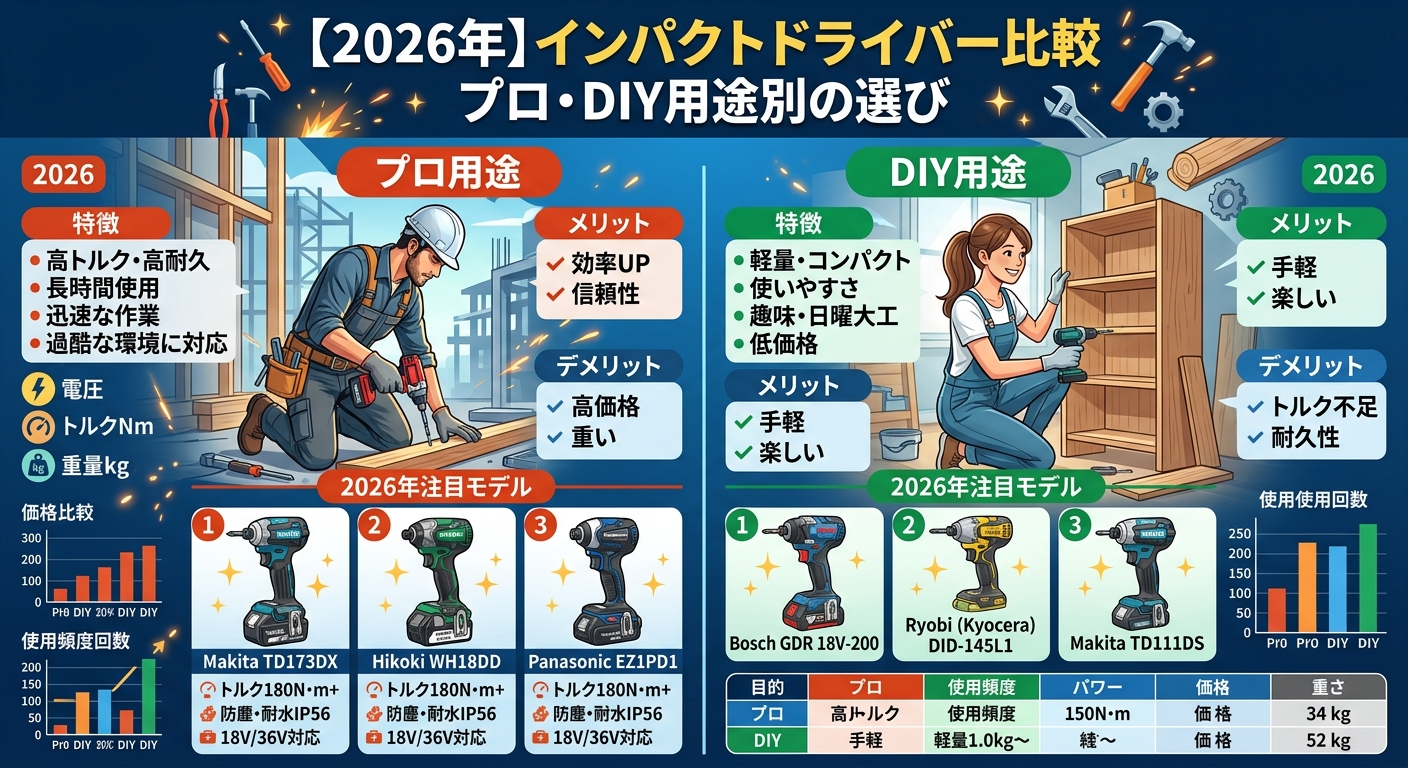
Best Impact Drivers 2026
Pro & DIY Buying Guide
Find the right driver by voltage, torque, and hammer mechanism.
This guide is for anyone shopping for an impact driver — from DIY beginners to working pros. It compares what to look for and popular Japanese-brand models. Some product links are affiliate links.
Three Things to Check Before Buying
① Voltage and battery capacity
10.8V-class drivers are lightweight and suited to everyday DIY tasks like assembling furniture, while 18V, 36V, and 40V-class models deliver more power for professional job sites and extended continuous use. Choosing a model within a battery-sharing lineup (so it uses the same battery as your circular saw or grinder) can save money as you build out a tool collection.
② Maximum fastening torque
Higher torque (N·m) means the driver can handle thicker screws and harder materials. For DIY and furniture assembly, 100–135N·m is generally plenty, while professional uses like interior and electrical work tend to favor models around 200N·m.
③ Hammer mechanism and mode switching
Beyond the traditional two-point hammer strike, some newer models use a triple-hammer mechanism that reduces vibration and screw cam-out. Mode-switching (strong / weak / fine-screw) helps the driver adapt to different materials and screw types.
Popular Models Compared
DCM ID-180D (18V, Entry-Level)
Makita TD173DZ (Tool Only)
HiKOKI WH18DC (Cordless Impact Driver)
Makita TD002GRDX (40Vmax, LED Light)
HiKOKI WH36DD (Multi Volt 36V, Triple Hammer)
Comparison Table
| Model | Voltage | Max Torque | Approx. Price | Best For |
|---|---|---|---|---|
| DCM ID-180D | 18V | 190N·m | ~¥15,000 (used) | Entry-level, budget-conscious |
| Makita TD173DZ | 18V | TBC | ¥18,370+ | Reliable go-to model |
| HiKOKI WH18DC | 18V | TBC | ¥16,800 (display unit) | Continuous work, pros |
| Makita TD002GRDX | 40Vmax | TBC | ¥55,790+ | High output, pros |
| HiKOKI WH36DD | 36V | 200N·m | ¥43,990 | Facilities/electrical/interior pros |
FAQ
Q. What voltage do I need for DIY use?
For general DIY tasks like assembling furniture or mounting shelves, a 10.8V–18V model is plenty. If you frequently drill wood or drive thick screws, consider stepping up to 18V or higher.
Q. Should I buy tool-only or a full battery kit?
If you already own batteries from the same brand, buying tool-only saves money. If this is your first tool from that lineup, a starter kit with battery, charger, and case is usually better value overall.
Q. Makita or HiKOKI — which should I choose?
Both are top-tier Japanese brands with no major difference in performance. If you already have batteries from one brand, sticking with it is the practical choice. If you’re starting fresh, either is a safe pick — go with whichever price point or lineup you prefer.
Match the tool to your use case and budget
10.8V–18V covers most DIY needs; 36V and up is built for professional use. Sticking to one battery-sharing lineup makes it easier to build out your tool collection.
Browse motorcycle helmet comparisons